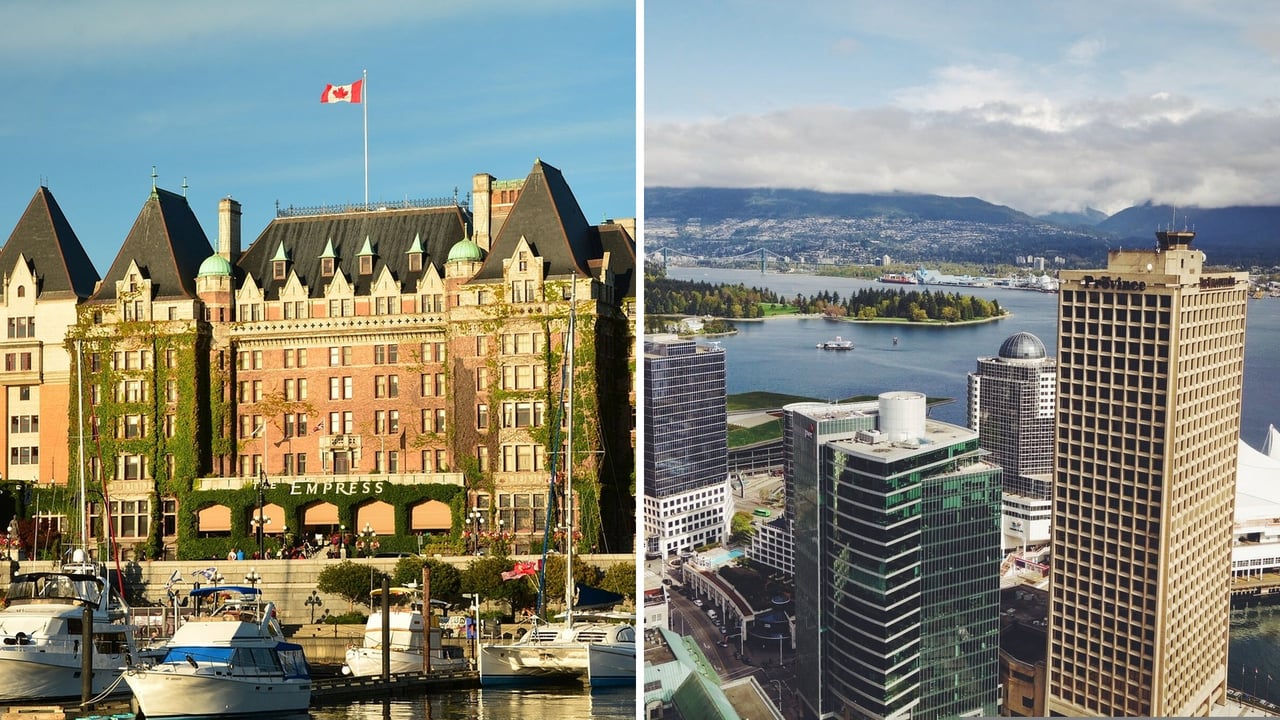
Vancouver vs. Victoria, BC: An Honest Comparison
Posted by Ainsley Gower
I get asked this question constantly — usually by someone in Kitsilano or North Van who’s been doing math on their mortgage and wondering if the ferry is as much of a barrier as people say.
Vancouver vs. Victoria. Which is better to live in?
I made a full video on this (link below) because the question deserves a real answer, not a pitch. Here’s the written version — covering the things that matter when you’re deciding where to build your life.
The Geography and Landscape
Let’s start with the basics, because they shape everything else.
Vancouver is a mainland city backed by mountains and connected to the rest of the province — and the continent — by road. Victoria sits on the southern tip of Vancouver Island, surrounded by ocean. Getting here requires a ferry or a flight, and that’s not a small thing. It changes the feel of the place profoundly.
Victoria is compact. It’s walkable in a way that Vancouver’s neighbourhoods are walkable, but the whole city feels that way. You’re never far from water. The scenery on a clear day — looking out toward the Olympic Mountains across the Strait — is quietly spectacular. It’s not a city that announces itself. It earns it.
Vancouver is dramatic. Mountains, ocean, density. The scale of it is part of the appeal.
The People
This is one of the more underrated differences. Victoria has a distinct community feel that surprises a lot of people who assume it’s just a slower version of Vancouver.
The city skews toward families, retirees, government workers, and a growing tech and remote-work population. It’s well-educated, politically engaged, and genuinely neighbourly in a way that larger cities tend to lose. People know their neighbours. Neighbourhoods have identities.
Vancouver has incredible diversity — one of the most genuinely multicultural cities in North America. The food, the culture, the languages you hear walking down the street. If that energy is part of what you love about city life, Victoria will feel different. Smaller and more homogeneous, though that is changing.
Neither is better. They’re just different communities, and which one fits depends on what you’re looking for.
Weather — and Why Victoria’s Microclimates Matter
Both cities are mild by Canadian standards. Neither gets much snow. Both are rainy in the winter.
But Victoria is measurably sunnier and drier than Vancouver, and that difference is real and significant over the course of a year. Victoria sits in a rain shadow created by the Olympic Mountains, which means storms rolling in off the Pacific often pass north or south of the city. Vancouver, sitting at the base of the Coast Mountains, catches a lot more of that moisture.
Here’s what that looks like in practice: Victoria averages around 2,183 hours of sunshine per year. Vancouver gets closer to 1,938. In a city where outdoor lifestyle is a core part of why people move here, that gap matters.
Within Victoria, microclimates are a real thing. The Saanich Peninsula — Sidney, North Saanich — tends to be even sunnier and drier than Victoria proper. Oak Bay and the waterfront areas can be foggier. This is worth knowing before you buy, and it’s something I factor into conversations with relocation clients all the time.
Getting Around
Victoria is a legitimate cycling city. The infrastructure has improved significantly in recent years — separated bike lanes, the Galloping Goose Regional Trail, the Lochside Trail. You can live car-light here in a way that’s genuinely viable, especially in the core neighbourhoods.
Driving in Victoria is easy by the standards of any city this size. There’s no real traffic problem. Most people are within 20 minutes of wherever they’re going.
The ferry is the part of this equation that trips people up most. BC Ferries runs regularly between Tsawwassen (near Vancouver) and Swartz Bay (near Victoria), and the sailing is about 1.5 hours each way. That’s workable for occasional trips. If you’re commuting between cities weekly, it’s a different conversation. Flights between Victoria and Vancouver take about 30 minutes and are frequent, which helps considerably.
Real Estate and Cost of Living
This is where the comparison gets most interesting for people seriously considering a move.
Victoria’s housing market is less expensive than Vancouver’s — meaningfully so. A detached home in a comparable central neighbourhood can cost $600,000–$1,000,000 less in Victoria than its Vancouver equivalent. Condos tell a similar story. For people being priced out of Vancouver, Victoria often opens up options that simply don’t exist in Metro Vancouver at the same budget.
That said, Victoria is not cheap. The median detached home price in Greater Victoria has climbed significantly, and the Fairfield, Oak Bay, and Rockland neighbourhoods that attract most relocation buyers are premium markets. If you’re coming from the Prairies or smaller BC cities, both Vancouver and Victoria will feel expensive.
Where Victoria genuinely wins on cost is the day-to-day quality of life per dollar spent. Housing costs aside, your dollar goes further — partly because the city is smaller and you spend less time in a car, less on parking, less on the friction that larger cities create.
Income comparisons are worth acknowledging honestly: if your income is tied to Vancouver’s job market, you may earn less in Victoria. Government, healthcare, education, and tech are the strong sectors here. Remote work has changed this calculus significantly for a lot of people.
Things to Do
Vancouver wins on pure scale. The restaurant scene, the arts, the cultural institutions, the events calendar — it’s a world-class city and it shows.
Victoria punches above its weight. The food scene has grown considerably in the last several years — Fairfield, Downtown, and Cook Street Village have genuinely excellent restaurants. The outdoor access is exceptional: trails, beaches, whale watching, kayaking. The arts community is active and tight-knit.
What Victoria offers isn’t less — it’s different. If your version of a good life involves hiking on a Tuesday morning, dinner at a neighbourhood spot where the owner knows your name, and a bike ride to the farmers market on Saturday, Victoria delivers that better than almost anywhere in Canada.
Who Each City Suits
Victoria tends to be the right call if:
• You want more house for your money
• You work remotely or your career is here
• You’re raising kids and want a smaller-community feel with strong schools
• You value outdoor access, pace of life, and daily quality over big-city scale
• You’re retiring or moving toward a slower chapter
Vancouver still makes sense if:
• Your career requires being in a major urban centre
• You have deep family or community ties there
• You love the energy and diversity that only a larger city provides
• The island lifestyle feels too contained
The Bottom Line
Victoria isn’t trying to compete with Vancouver. It’s a genuinely different kind of place — smaller, quieter, and for a lot of people, more livable in the specific ways that actually matter day to day.
I made a full video walking through all of this in detail — the stats, the neighbourhoods, the real cost comparisons. Worth watching if you’re seriously weighing the two cities. Watch it here →
And if you want a local’s honest read on whether Victoria is the right fit for where you’re at in life, I’m always happy to chat. Not to convince you — just to help you figure it out.
More soon.
— Ainsley
Ainsley Gower · Victoria-based real estate agent specializing in relocation buyers and luxury properties across Greater Victoria. · (250) 882-6481 · [email protected]